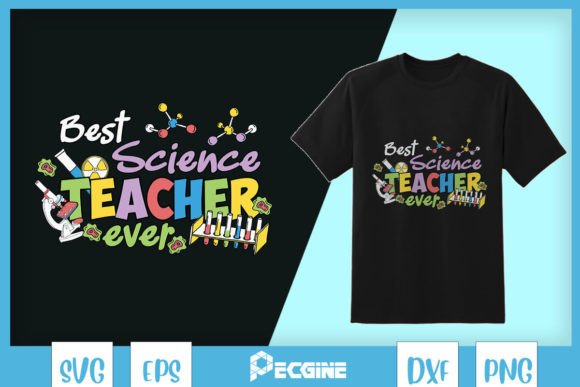
Reviewing the Best Science Teacher Ever SVG for Embroidery
As a designer who spends half my life digitizing and the other half stitching, I approach every new Best Science Teacher Ever SVG with a healthy dose of skepticism. We have all seen those cluttered, overly complex files that look fantastic on a computer screen but turn into a tangled mess of thread breaks and puckering on actual fabric. When I pulled up this specific design to evaluate it for a real-world project, my primary concern was not just aesthetics, but functionality. Could this graphic translate effectively from a digital asset into a durable, high-quality machine embroidery design?
The first impression is surprisingly clean. The layout avoids the common pitfall of cramming too many scientific symbols—beakers, atoms, microscopes—into a tight space. Instead, it relies on strong typography and balanced spacing. For an embroidery reviewer, this is immediately promising. Clean lines mean fewer jumps, better stitch flow, and a higher likelihood of a professional-looking finished product. The mood is celebratory yet professional, making it suitable for more than just a casual hobby project. It feels like something a boutique owner could confidently sell as part of a curated collection.
Real-World Application: The End-of-Year Gift Rush
To truly test the viability of this design, I imagined a typical scenario for many Etsy sellers and craft business owners: the end-of-school-year rush. A client requests a personalized gift for a favorite chemistry teacher. They want something durable, washable, and visually striking. I decided to visualize this Best Science Teacher Ever SVG on a high-quality canvas tote bag and a mid-weight sweatshirt.
On the tote bag, the design’s structure holds up well. Because the file includes pre-sized formats, I did not have to guess at scaling issues. The transparency of the PNG version allowed me to quickly mock up the placement on different fabric colors. For a tote bag design, visibility is key. The bold nature of the text ensures readability from a distance, which is crucial for items that are carried around campus or used for grocery runs. If you are creating a handmade product for a small shop product line, this kind of immediate visual recognition drives buyer engagement.
When shifting focus to sweatshirt embroidery, the considerations change slightly. Here, the texture of the fleece matters. A design with too much stitch density can make the garment stiff and uncomfortable. While I cannot verify the exact stitch count without opening the file in my software, the visual simplicity suggests that a skilled digitizer could optimize this for softness. Using a combination of satin stitch for the borders and a lighter fill stitch for any solid elements would maintain the design’s integrity without weighing down the fabric.
Navigating Fabric and Hoop Constraints
One of the most critical aspects of reviewing any digital embroidery file is understanding its limitations. This design is versatile, but it is not magic. If you are planning to use this on a curved surface, such as a cap or hat, you must be cautious. The horizontal spread of the text might exceed standard cap hoop sizes. In such cases, you may need to scale the design down significantly. However, shrinking text-based designs can lead to legibility issues. Tiny lettering often gets lost in the nap of twill or cotton caps.
For baby embroidery projects, such as onesies or bibs, the same rule applies. Delicate skin requires soft stitches and minimal bulk. If you choose to embroider this on a baby item, consider using a single-color running stitch outline instead of a dense fill. This creates a subtle, elegant look that is gentle on sensitive skin. Always test the design on scrap fabric first. This is non-negotiable. Check how the thread colors interact with the fabric texture. A dark navy thread on a black shirt will vanish, while a bright neon green might bleed visually if the stabilizer is not adequate.
Speaking of stabilizer, this design likely benefits from a cut-away stabilizer if used on stretchy fabrics like jersey knits for custom apparel. A tear-away might leave the stitches unstable after repeated washing. For woven fabrics like aprons or pillow covers, a tear-away is usually sufficient, provided the hoop size is appropriate for the design dimensions. Always confirm the hoop size compatibility before starting your machine. Nothing ruins a commercial embroidery batch faster than realizing halfway through that the design does not fit the hoop.
Visual Appeal and Brand Consistency
From a branding perspective, consistency is everything. If you are an apparel decorator or a digital product seller, you need assets that look cohesive across different products. The Best Science Teacher Ever SVG offers a neutral yet thematic aesthetic. It does not scream "cartoonish," which allows it to fit into a more mature, professional brand identity. This increases customer trust. Buyers are more likely to perceive a product as high-value if the design looks intentional and crisp rather than chaotic.
The inclusion of multiple formats—SVG, PNG, and DXF—adds significant value for creators who work across different platforms. The SVG is ideal for cutting machines if you decide to create hybrid products, such as an embroidered patch with a vinyl accent. The PNG, with its transparent background, is perfect for creating printable mockup images for your online store. High-resolution previews are essential for converting browsers into buyers. The DXF format ensures versatility for older software or specific industrial applications. Having these options means you are not locked into one workflow, making it a flexible addition to your library of design assets.
Practical Notes for the Serious Maker
Before you commit to producing a large batch of holiday embroidery gifts or personalized gift items, take a moment to review the technical details. Since the product description mentions pre-sized files, ensure that the size matches your intended project. If you need to resize, do so in small increments and always re-digitize or adjust settings if you are experienced enough to do so. Otherwise, stick to the provided sizes to avoid distortion.
Check the license terms carefully. While many sellers allow commercial use for physical finished goods, restrictions often apply to selling the digital file itself. Confirm whether you can use this for commercial embroidery projects without additional fees. Transparency here protects your business and respects the original creator.
Finally, consider the color palette. Science themes often lend themselves to cool tones—blues, greens, and purples—but do not be afraid to experiment. A classic black thread on a white lab-coat-style apron creates a timeless, authoritative look. Conversely, vibrant threads on a dark hoodie can pop beautifully. Test your thread color contrast under different lighting conditions. What looks good on your monitor might look dull in natural light.
In conclusion, the Best Science Teacher Ever SVG is a solid contender for your next project. It balances thematic relevance with practical design principles. Whether you are creating a patch for a science club jacket, a kitchen towel for a home economics teacher, or a pillow cover for a classroom reading nook, this design offers the flexibility and clarity needed for professional results. Just remember to respect the materials, test your setup, and let the quality of your stitching speak for itself.