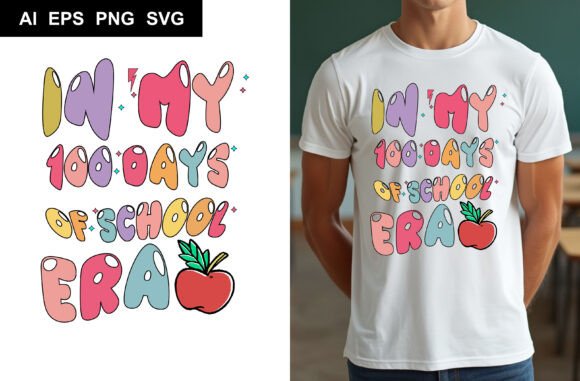
Reviewing In My 100 Day of School Era T-shirt Art
As a designer who spends half my life digitizing and the other half stitching, I have learned that not every graphic translates well to thread. We often see Print Templates and digital Graphics marketed for embroidery without considering the physical realities of the needle and bobbin. Today, I am taking a close look at In My 100 Day of School Era T-shirt Art. This is not just about whether it looks cute on a screen; it is about how it performs when put under the presser foot of a machine.
The "100 Days of School" milestone is a massive event in elementary education. Parents, teachers, and crafters are constantly searching for fresh ways to celebrate this achievement. When I first opened the file for In My 100 Day of School Era T-shirt Art, my immediate impression was one of playful energy. The layout feels modern, tapping into current social media trends with the "era" phrasing, which gives it a contemporary edge over traditional, static school-themed designs. For an embroidery project, this visual personality is crucial. It needs to feel fun and celebratory, not stiff or overly academic.
Real-World Application: The Custom Sweatshirt Test
To truly evaluate this design, I imagined a specific client scenario. A local boutique owner approached me about creating a limited run of custom apparel for a school fundraiser. She wanted something that would appeal to both the students wearing it and the parents buying it as a keepsake. We decided to test In My 100 Day of School Era T-shirt Art on a mid-weight cotton blend sweatshirt. This is a common substrate for sweatshirt embroidery, but it presents challenges regarding fabric stretch and pile.
The design’s structure held up surprisingly well. Because the theme is bold, it does not rely on microscopic details that might get lost in the texture of fleece or terry cloth. However, I noticed that the spacing between elements is key. If you are planning to use this as a tote bag design or on a canvas apron, the open areas allow the fabric texture to breathe, preventing the finished product from looking like a solid, heavy patch of thread. This balance is essential for maintaining a professional look in commercial embroidery.
Stitching Dynamics and Fabric Considerations
When working with any machine embroidery design, understanding stitch types is vital. While I cannot specify the exact stitch count without seeing the proprietary data, I can infer the necessary approach based on the visual weight of In My 100 Day of School Era T-shirt Art. Larger text elements typically require a fill stitch to create opacity and presence. If you are stitching this on dark fabric, ensure your underlay is sufficient to prevent the background color from peeking through.
For smaller accents or outlines within the design, a satin stitch or running stitch likely provides the crisp definition needed. One area where I advise caution is with stitch density. If the design has overlapping elements, you must check if the digitizer has used pull compensation correctly. On stretchy fabrics like jersey t-shirts, high density can cause puckering. I always recommend using a cut-away stabilizer for garments that will be washed frequently, such as school clothes. This ensures the embroidery file remains stable and does not distort over time.
If you are adapting this for an embroidered patch, the considerations change. Patches allow for higher density because they are stabilized by a stiff backing. In this context, In My 100 Day of School Era T-shirt Art could serve as a vibrant badge of honor. However, if you are applying it to a curved surface like a cap, you must verify the hoop size compatibility. Large, flat designs often struggle on the front panel of a baseball cap unless they are scaled down significantly.
Navigating Scale and Detail
One of the most common mistakes makers make is ignoring scale. The description notes that this asset is easy to modify and resize. While this flexibility is a benefit, it is also a trap. If you shrink In My 100 Day of School Era T-shirt Art too much for a small hoop size, fine lines may merge, and small text may become illegible. I always suggest creating a test stitch-out on scrap fabric before committing to the final garment.
This is particularly important for baby embroidery projects. Soft, delicate fabrics require lighter touch designs. If you plan to use this on a onesie or a baby blanket, consider simplifying the design or using an applique design technique where fabric pieces fill the larger shapes, reducing the amount of thread on the baby's skin. This not only improves comfort but also reduces production time and thread costs for the Etsy seller or small shop product creator.
Commercial Viability and Brand Consistency
For craft business owners, the visual appeal of a design directly impacts buyer engagement. In My 100 Day of School Era T-shirt Art has a strong thematic hook. It taps into a specific cultural moment, making it highly shareable on social media. When you present this as a personalized gift or a holiday embroidery item, it resonates because it feels current and relevant.
However, professionalism lies in the execution. A sloppy stitch-out can ruin even the best concept. Ensure your thread colors contrast well with the fabric. A high-contrast mockup can help you visualize this before you thread the machine. If you are selling digital embroidery file products or finished items, consistency is key. Use this design as part of a broader collection of school-themed assets to build brand recognition. Customers who buy one item are likely to return for matching design assets if the quality is consistent.
Practical Designer Notes for Best Results
Before you launch this into your production line, here are my top recommendations for ensuring success with In My 100 Day of School Era T-shirt Art:
- Test on Scrap Fabric: Always stitch a sample on the same material you intend to use for the final product. This reveals issues with tension and density.
- Check Thread Contrast: View your design in black and white to ensure the elements are distinct. Low contrast can make the design look muddy from a distance.
- Verify Licensing: Since this is categorized under Print Templates and Graphics, confirm whether the license allows for commercial use of physical embroidered items. Some digital files are for personal use only.
- Adjust for Fabric Texture: On textured fabrics like towels or fleece, you may need to increase the stitch length slightly to prevent the thread from sinking into the pile.
- Use Proper Stabilizer: Match your stabilizer to your fabric. Cut-away for knits, tear-away for wovens, and wash-away for delicate or sheer materials.
- Inspect Small Details: Zoom in on the digital file. If there are tiny isolated stitches, they may need to be merged or removed to prevent bird nesting during stitching.
In conclusion, In My 100 Day of School Era T-shirt Art is a versatile and timely addition to your library. It bridges the gap between trendy graphic design and practical embroidery application. By respecting the limitations of the medium and paying attention to technical details like stabilizer choice and stitch density, you can transform this digital asset into a high-value finished product. Whether you are creating a single custom apparel piece for your child or a bulk order for a school store, this design offers the flexibility and visual impact needed to succeed in today’s creative market.